When you click the link, it will take you to the corresponding page.
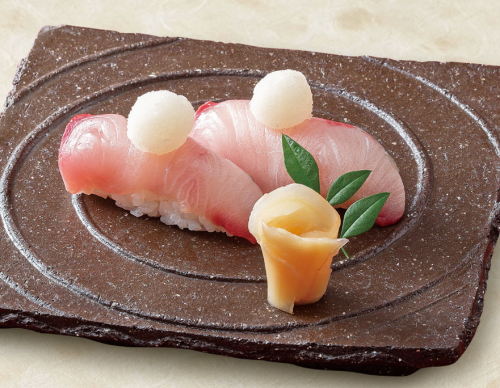
寒鰤の握り寿司
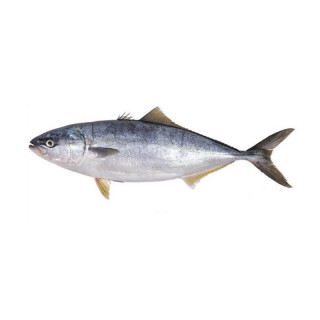
Buri (鰤), which belongs to the genus of yellowtail, is a representative winter fish. It is a complex character used in Chinese characters. It is a blue fish with red flesh widely used as a key ingredient in sushi. Along with Bushiri and Kanpachi which are also members of the yellowtail family, they are known as the three brothers of yellowtail. During winter, large yellowtail measuring over 1 meter in size and with high oil, content are considered premium and referred to as Kanburi (寒ブリ). They are not as popular during the summer. On the other hand, Bushiri is in season during the summer. Yellowtail is also considered a rising star in the fish market. In Kanto, the young yellowtail is called Inada, while in Kansai, it is called Hamachi. However, the yellowtail raised in Kansai is shipped to Kanto under the name Hamachi, so in Kanto, farmed yellowtail is referred to as Hamachi.
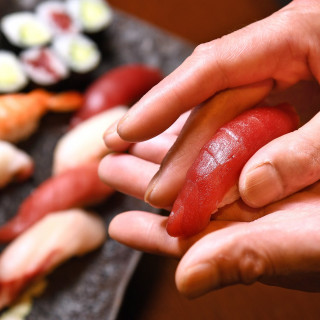
Nigiri sushi is a traditional type of sushi in Japan and one of the most popular and widely recognized forms of sushi. It consists of vinegared rice, known as sumeshi or shari, which is hand-pressed into a small, bite-sized shape. On top of the rice, a fresh piece of seafood or other ingredients is placed. Common toppings include tuna, salmon, shrimp, sea urchin, and salmon roe. Nigiri sushi originated during the Edo period in Tokyo (formerly Edo) and is also referred to as Edomae sushi. At that time, sushi was a type of fast food served from street stalls, where sushi chefs would quickly prepare and serve nigiri to customers. The hallmark of nigiri sushi is its simplicity and the speed with which it can be prepared. When eating nigiri sushi, it is customary to dip it lightly in soy sauce. Wasabi is typically placed between the rice and the topping, adding a bit of spiciness and enhancing the flavor. Nigiri sushi can be eaten with hands or chopsticks, and both methods are acceptable. The quality of nigiri sushi heavily depends on the freshness of the ingredients and the skill of the sushi chef. Despite its simplicity, it offers a profound and refined taste experience. Nigiri sushi can be enjoyed in a variety of settings, from high-end sushi restaurants to casual conveyor belt sushi (kaiten-zushi) establishments, and it is beloved by people both in Japan and around the world.